
Product
Mining trucks
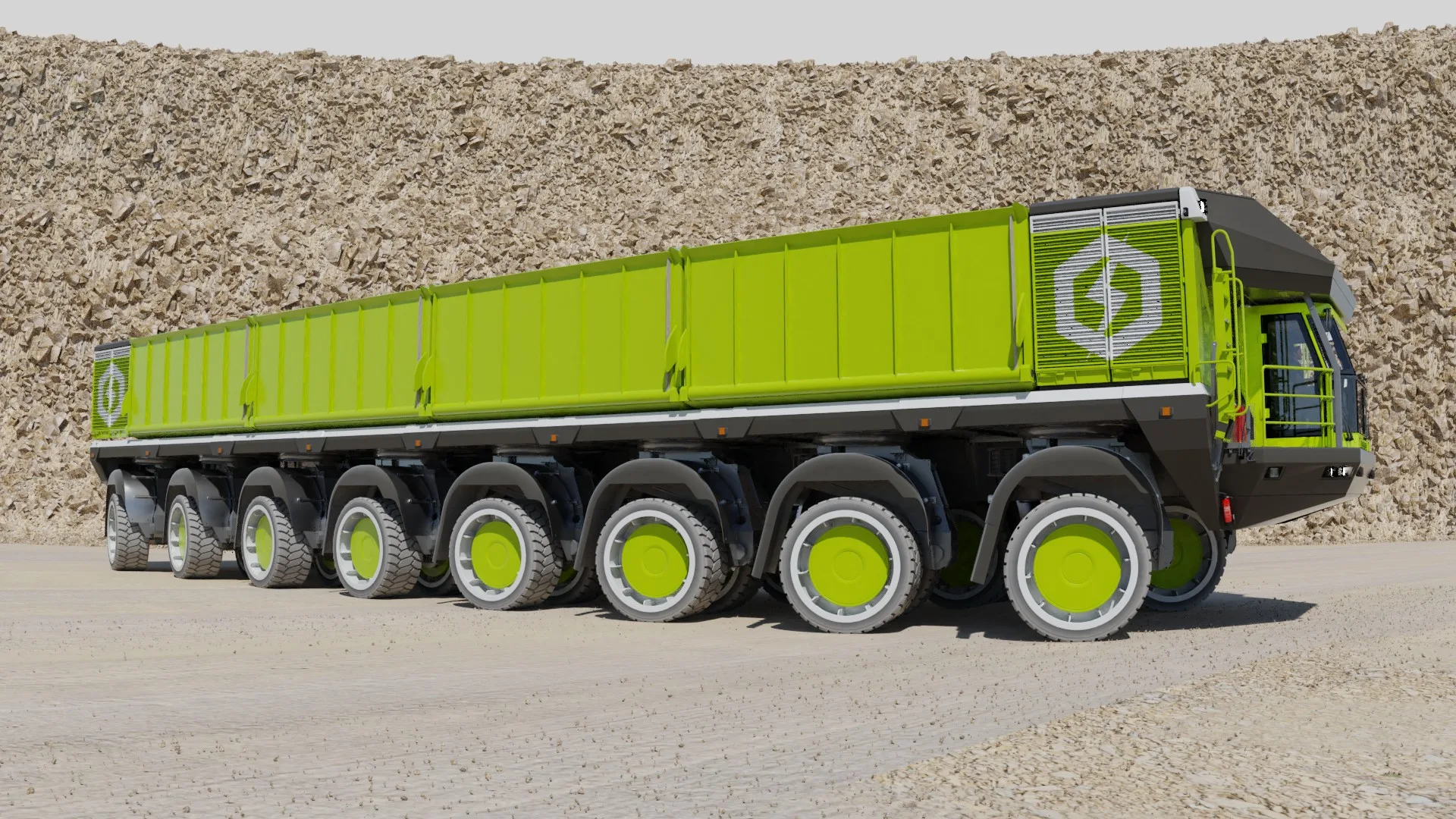
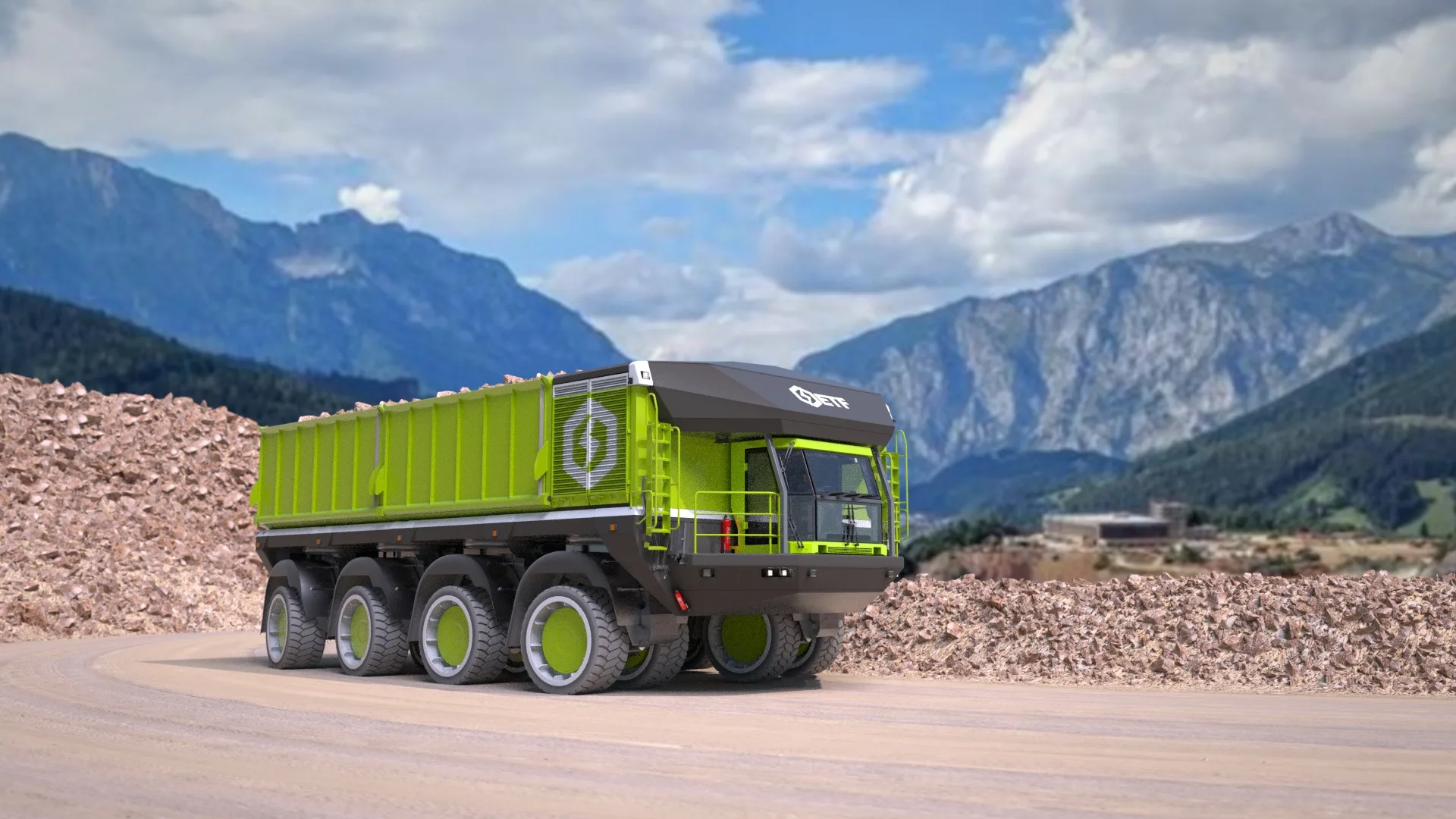
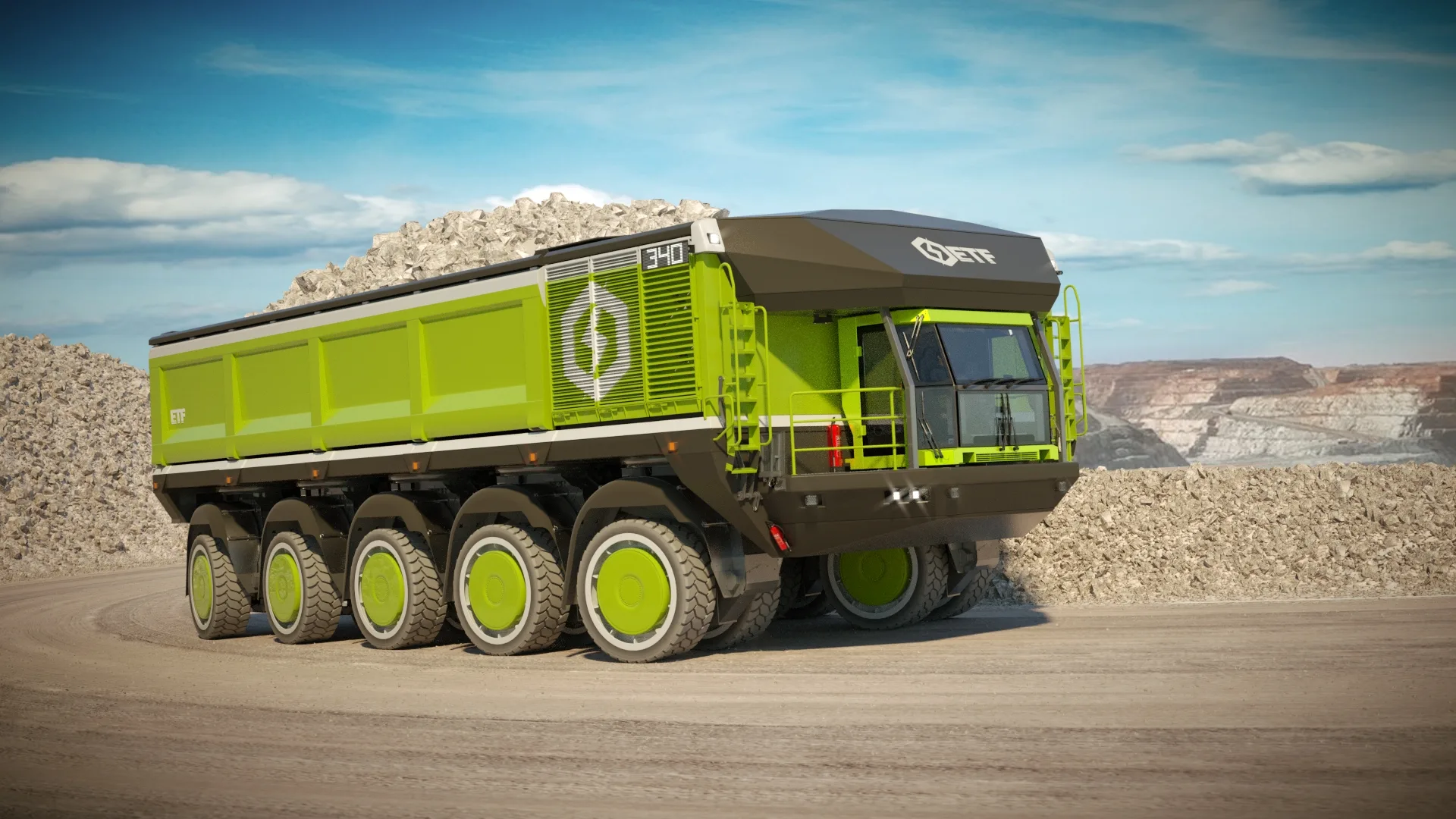
ETF developed a mining truck range that takes the payload of a large haul truck and the mobility of an articulated dump truck. Because they drive and steer on every wheel, these trucks work off-highway and off-road alike.
What is different
- 01 Modular design
- 02 All wheel drive
- 03 All wheel steering
- 04 Wheels, batteries and cabin changed in 15 minutes
- 05 Complete axle group changed in 25 minutes
- 06 95% technical availability across the full life cycle
- 07 Higher utilisation
- 08 Safer by design
- 09 Zero emissions and very low noise
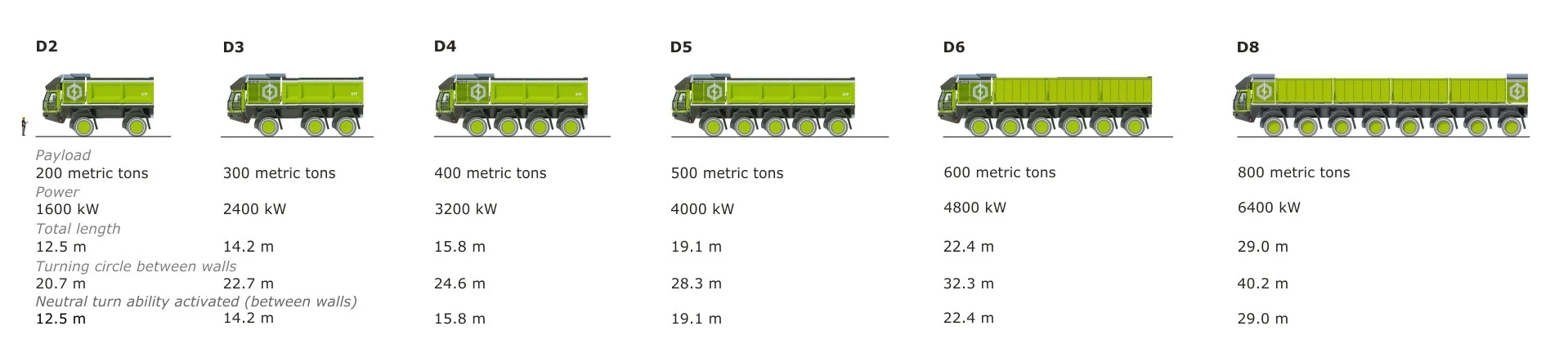
200 to 800 tonnes on one road width
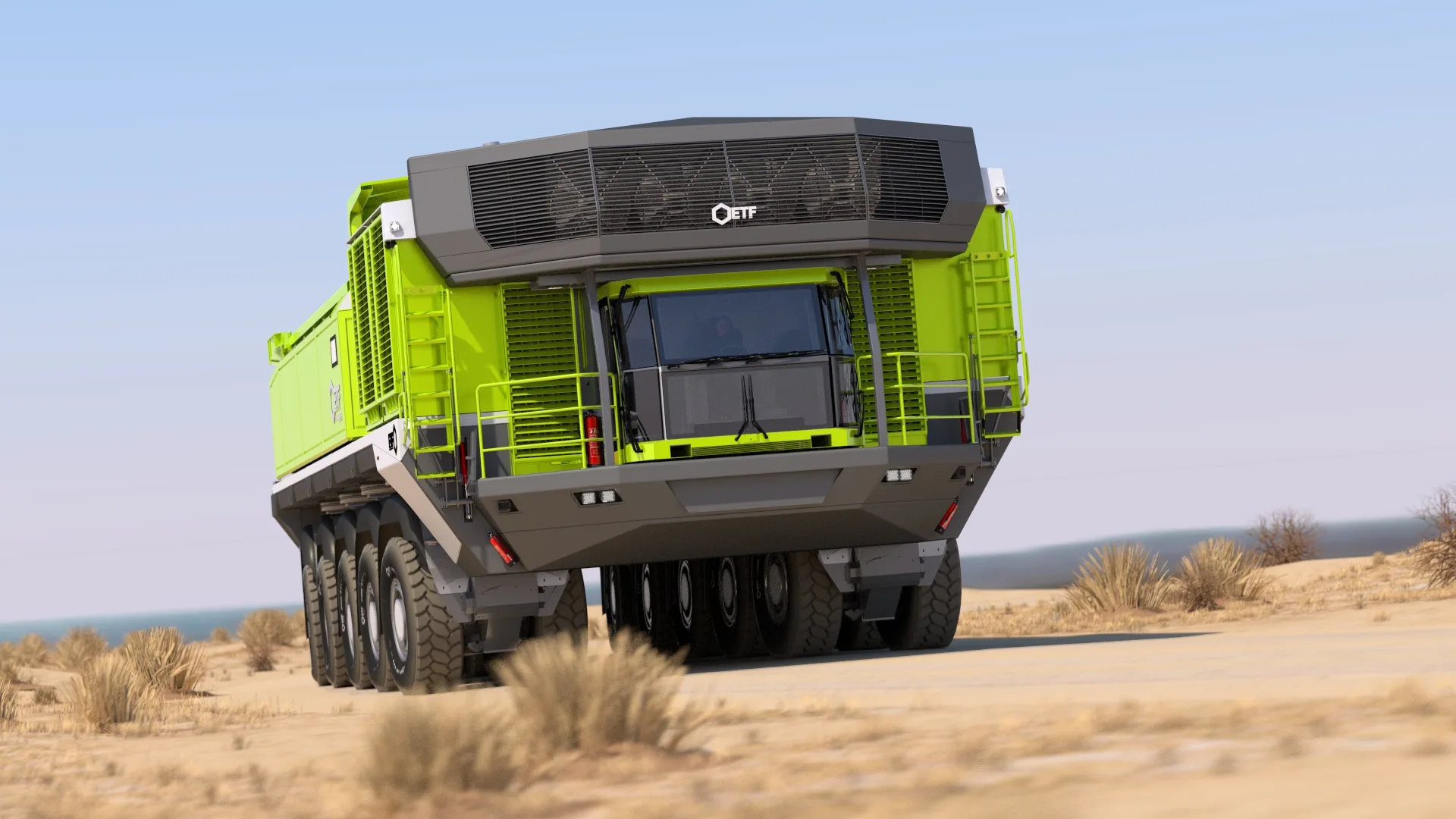
Every type can be supplied in haul train configuration, and every type drives and steers on all wheels with ABS and traction control. Width and height are the same across the range, so the 800 tonne truck uses the haul road built for the 200 tonne truck.
| Model | Payload | Power | Total length | Turning circlebetween walls | Neutral turnbetween walls |
|---|---|---|---|---|---|
| D2 | 200 t | 1,600 kW | 12.5 m | 20.7 m | 12.5 m |
| D3 | 300 t | 2,400 kW | 14.2 m | 22.7 m | 14.2 m |
| D4 | 400 t | 3,200 kW | 15.8 m | 24.6 m | 15.8 m |
| D5 | 500 t | 4,000 kW | 19.1 m | 28.3 m | 19.1 m |
| D6 | 600 t | 4,800 kW | 22.4 m | 32.3 m | 22.4 m |
| D8 | 800 t | 6,400 kW | 29.0 m | 40.2 m | 29.0 m |
- Width 7.6 m the same on every model
- Height 6.3 m the same on every model
- Haul road width 24.16 m trucks and haul trains alike
- Drive All wheel drive with all wheel steering
- Braking ABS and traction control on every wheel
Narrower roads put tonnes back in the reserve
A short turning radius means less road, and less road means more mine.
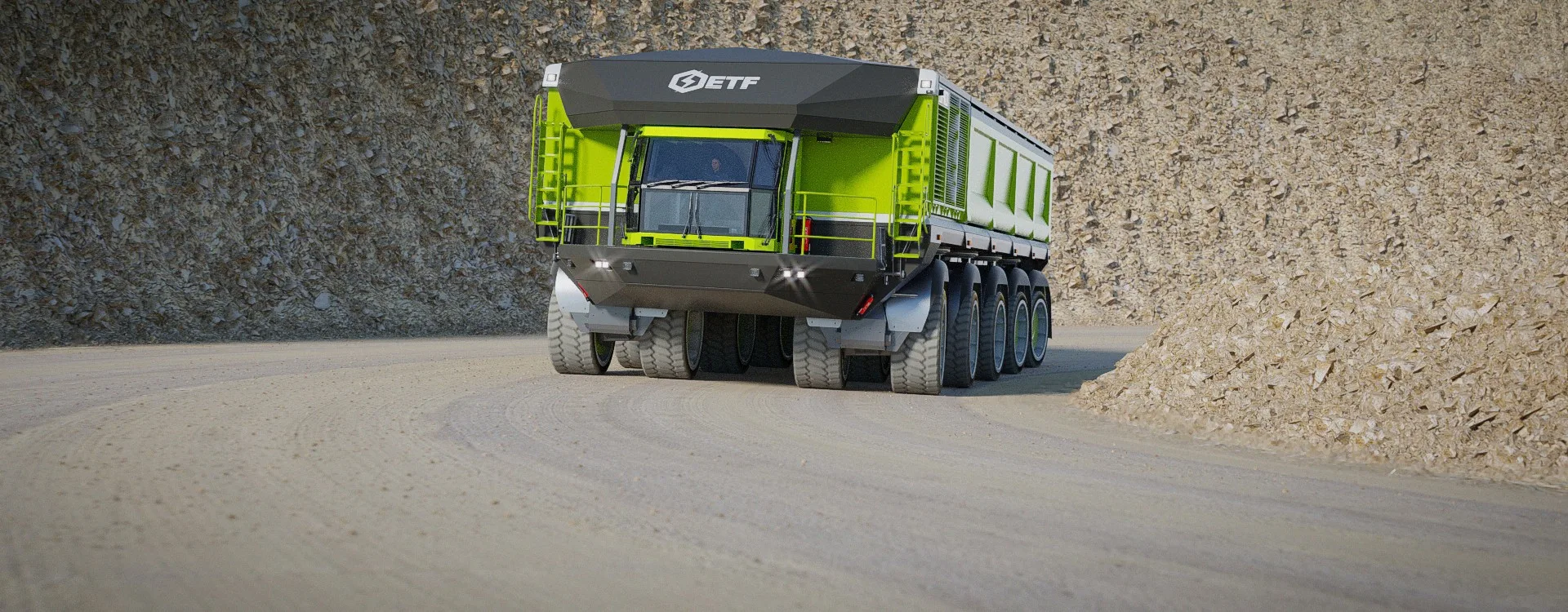
Every ETF truck steers on all wheels, which gives it a very short turning radius. Trucks and haul trains both need a total road width of 24.16 metres. Comparable large haul trucks need roads between 3.68 and 7.22 metres wider than that, depending on the type.
Those metres come off the pit wall and go back into the reserve. Across a mine it works out at somewhere between 1,656,000 and 3,249,000 BCM of additional output, and the roads cost less to build and less to maintain.
The jobs that park a conventional fleet
Checking tyre pressures, topping up lubricants, cleaning lamps and mirrors. All of it happens while the machine keeps working.
On ETF equipment those checks are completed automatically during operation, so they stop being downtime at all.
Weather stops mattering too. A conventional fleet gets parked until wet, slippery conditions improve. The integrated all wheel drive and ABS braking on ETF equipment keeps the fleet running through it.
Stability problems designed out
Body sway and frame cracking are familiar on conventional large haul trucks. They were engineered out of this platform.
Haul road maintenance also stops being as critical as it is when you are running a conventional fleet.
Undulation in the road and the impact of loading are absorbed by the hydro-pneumatic suspension and the oscillating axle. Operator comfort and safety come out the best in the industry.
No tyres, so no flat tyres
Tyres are one of the biggest limitations on a current haul truck, and not only because of what they cost.
Downtime from flats pulls technical availability down considerably across a fleet.
The suspension ETF developed makes it possible to run without tyres at all. Every ETF machine uses special wheels with a rubber profile instead, which is unique in the industry and takes flat tyres out of the availability calculation completely.
The component comes off, the truck keeps hauling
High availability comes from exchanging components instead of repairing them on the vehicle.
The haul truck goes back to work straight away and the repair is completed in the workshop without it.
Wheels, batteries and cabins change in 15 minutes. Because the same major components are used across the range, ETF can hold very low stock levels and still have the right part on hand.
Fewer drivers on the road
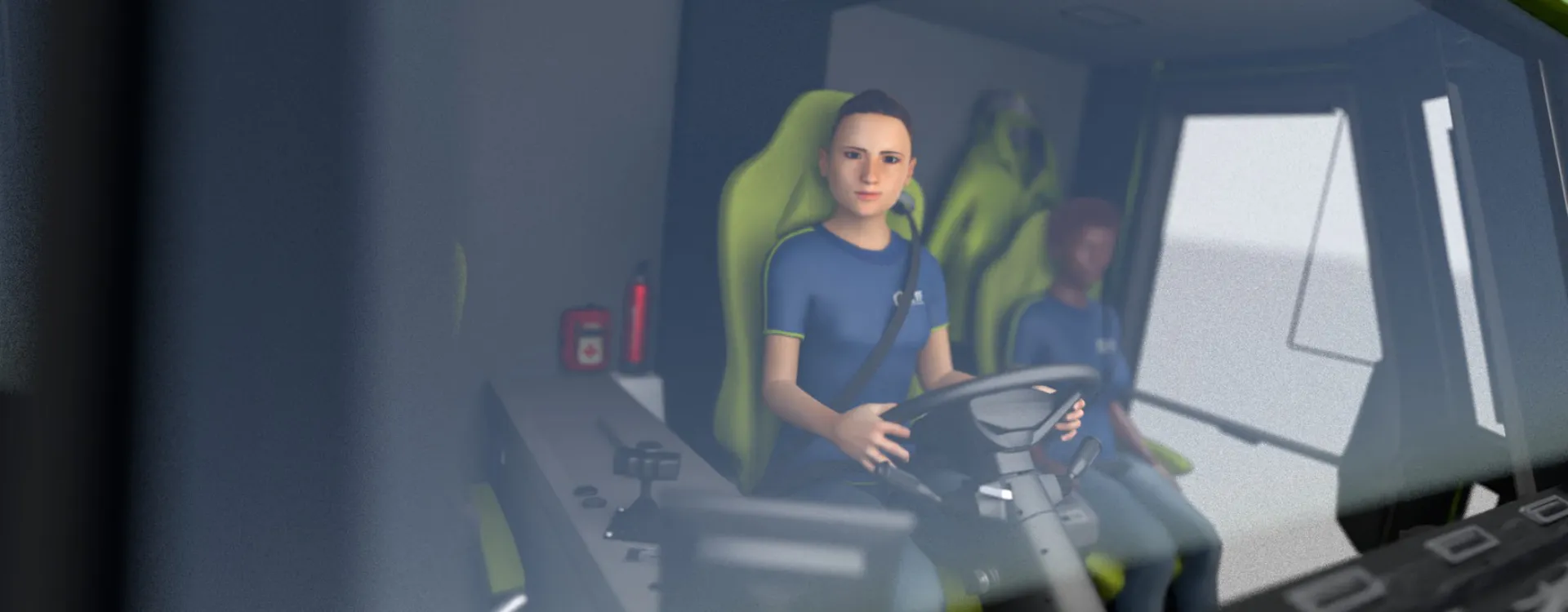
A haul train moves the same tonnage with far fewer drivers on the road, which takes a lot of collision risk out of the pit. Every haul train carries the following as standard.
- ABS brakes and traction control on all wheels, for traction and steering on slippery roads with no jack-knifing
- Sleep deterrent system
- Collision avoidance system
- 5 cameras: reverse, mirror, forward and a roof-mounted loading camera
- 5 dual range radars and 2 velocity radars
- Enhanced lighting
- Enhanced ergonomics and HVAC system
ETF trucks: the lowest cost per tonne in the industry.